Conservation
10 Best Places to See Sea Turtles in Indonesia
{ "title": "10 Best Places to See Sea Turtles in Indonesia 2026 Guide", "slug": "best-places-to-sea-turtles-indonesia-2026-guide", "summary": "Discover be
S
Sea Turtle Tours
Local Sukamade travel consultant & conservation partner
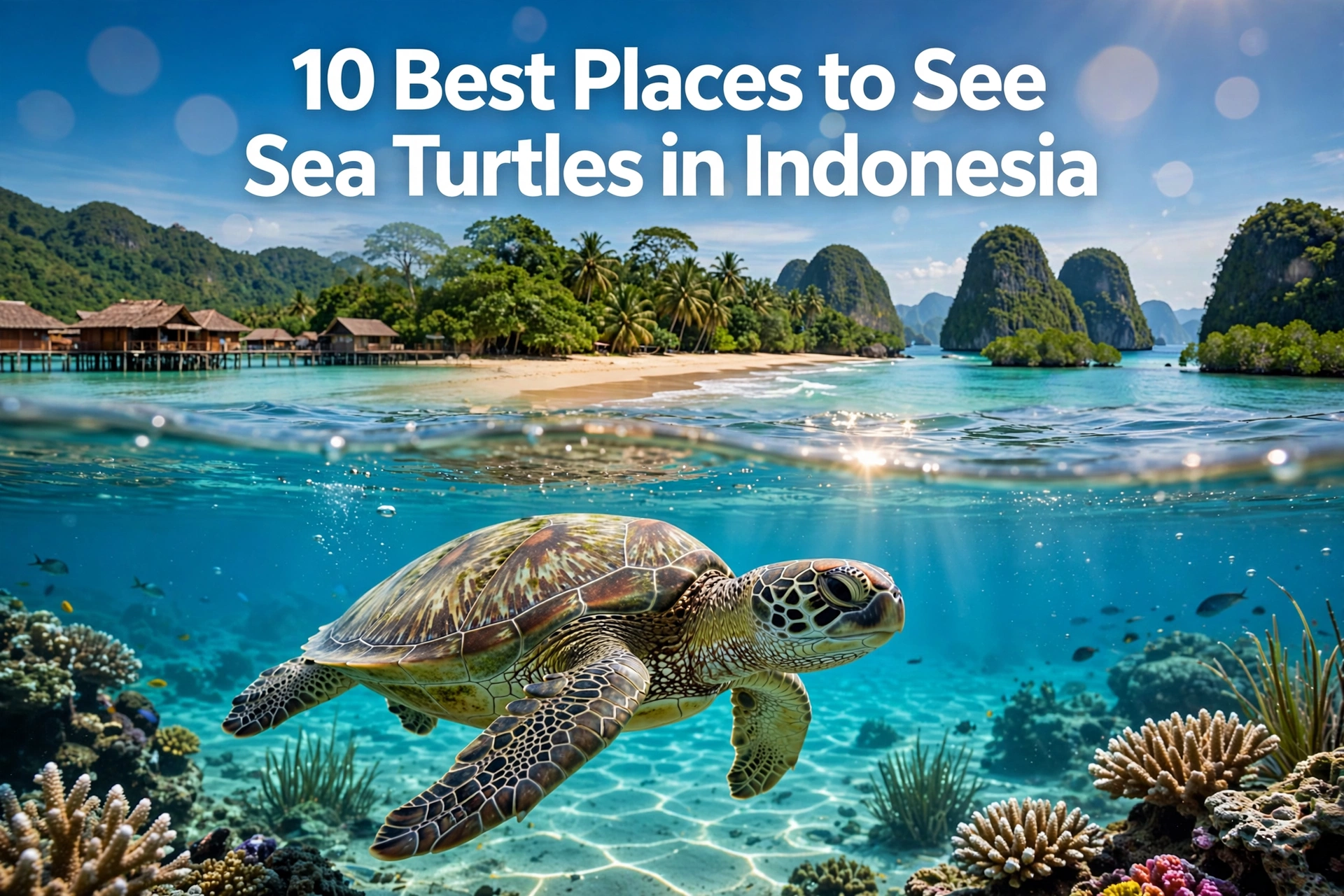
10 Best Places to See Sea Turtles in Indonesia 2026 Guide
Discover best places to see sea turtles in Indonesia ✓ Sukamade nesting ✓ Raja Ampat diving ✓ Gili snorkeling ✓ Derawan conservation ✓ 2026 season guide. Book ethical tours now.
Indonesia sits at the epicenter of the Coral Triangle, making it one of the best places to see sea turtles in Indonesia and globally for encountering six of the world's seven sea turtle species.
As local conservation partners operating daily inside Meru Betiri National Park, Sea Turtle Tours provides first-hand 2026 insights into nesting beaches, foraging grounds, and ethical viewing protocols mandated by Balai Taman Nasional Meru Betiri and BBKSDA Jawa Timur.
This guide details the top 10 locations, species-specific timing, 2026 permit requirements, and how to ensure your visit directly funds protection efforts rather than exploitation.
For travelers planning a 2026 itinerary, the primary distinction lies between nesting beaches (like Sukamade, Tamban, Belambangan) where gravid females lay eggs nightly, and foraging reefs (like Raja Ampat, Gili Islands, Derawan) where resident juveniles and adults feed year-round.
Understanding this behavioral ecology—verified by current IUCN Red List assessments and KLHK population monitoring data—is critical for selecting the right destination and operator.
Below, we break down every site with updated 2026 access logistics, conservation entry fees, and strict ethical guidelines.
1. Pantai Sukamade, Meru Betiri National Park (East Java): The Premier Nesting Sanctuary
Pantai Sukamade remains the crown jewel for witnessing the ancient nesting ritual of the Green Turtle (Chelonia mydas) and Olive Ridley (Lepidochelys olivacea).
Located deep within Meru Betiri National Park (TNMB), Banyuwangi, East Java, this beach hosts nesting activity 365 days a year, peaking during the wet season (November–March).
As the official local consultant for Sea Turtle Tours, we coordinate directly with TNMB rangers for the 2026 season.
2026 Access Logistics & 4WD Expedition Details
Reaching Sukamade requires a specialized 4WD Jeep journey (approx. 3–4 hours from Banyuwangi/Ketapang or 5–6 hours from Surabaya/Jember) traversing plantation roads, river crossings (Bedadung, Sambiriver), and rough coastal tracks.
2026 Update: Road conditions post-2025 rainy season have improved on the Jajag–Sarongan segment, but the final 15 km beach drive remains tide-dependent.
[!IMPORTANT] 2026 Mandatory Regulations: All visitors must enter via official TNMB gates (Jajag or Rajegwesi). Entry permits (SIMAKSI) and Conservation Fees (PNBP) are strictly enforced by BBKSDA Jatim rangers. Night patrols are only permitted accompanied by certified TNMB rangers. Flash photography, white lights, and touching turtles are prohibited under UU No. 5/1990 & PP No. 7/1999. Violations incur heavy fines and deportation risk.
The Sukamade Experience: Patrol & Hatchery
The core activity is the Night Turtle Patrol (20:00–00:00). Rangers locate nesting females; guests observe silently from 10 m distance.
The following dawn (05:00), guests participate in hatchling release (pelepasan tukik) at the semi-natural hatchery managed by TNMB.
In 2026, the hatchery success rate averages 85% for Green Turtles.
[!TIP] Booking Window: For 2026 peak season (Dec–Feb), book the Sukamade Tour Package minimum 30 days ahead. Jeep fleet capacity is capped by TNMB to 15 vehicles/night to minimize beach disturbance. Weekdays offer significantly higher solitude than weekends.
2. Raja Ampat (West Papua): Global Epicenter of Marine Biodiversity
Raja Ampat is not merely a diving destination; it is a critical foraging ground for Hawksbill (Eretmochelys imbricata) and Green Turtles.
The Dampier Strait and Misool Marine Reserves host resident populations year-round. 2026 data from the Raja Ampat MPA Management Authority indicates stable Hawksbill numbers on specific reefs like Mike's Point and Boo Windows.
Diving vs. Snorkeling Encounters
- Diving: Best for Hawksbills feeding on sponges at 15–25 m. Liveaboards (7–10 nights) cover maximum ground.
- Snorkeling: Shallow reefs at Arborek Jetty and Sawandarek offer near-guaranteed Green Turtle grazing on seagrass beds at 2–5 m depth.
2026 Entry Tags: The Raja Ampat Marine Park Entry Tag (PIN) fee increased in Jan 2026 to IDR 1,000,000 (domestic) / IDR 700,000 (foreign) per year. Purchase only via official e-tag portal or authorized liveaboard operators.
3. Gili Islands (Lombok, West Nusa Tenggara): Accessible Turtle Capital
The trio of Gili Trawangan, Gili Meno, and Gili Air offers the highest probability of Green Turtle encounters for snorkelers in shallow water (2–4 m).
The Gili Matra Marine Recreational Reserve (TWP Gili Matra) management reports 2026 seagrass bed health is "Good," supporting a resident population of ~300+ identifiable individuals.
Ethical Snorkeling Protocols 2026
- No Touching/Chasing: Enforced by Gili Eco Trust patrol boats.
- Sunscreen Ban: Only reef-safe (non-oxybenzone/octinoxate) allowed.
- Best Spot: Turtle Point (Gili Trawangan West) and Meno Wall (Gili Meno).
[!TIP] Visit Gili Meno for quieter encounters. Stay at least 2 nights to catch early morning (07:00–09:00) feeding windows when boat traffic is lowest.
4. Derawan Islands (East Kalimantan): The Turtle Highway
The Derawan Archipelago (Derawan, Sangalaki, Kakaban, Maratua) is a globally significant rookery for Green Turtles and Hawksbills.
Sangalaki Island is the standout: a protected nesting island managed by BKSDA Kalimantan Timur where rangers relocate eggs to hatcheries nightly.
2026 Sangalaki Day Trip Logistics
- Access: 2-hour speedboat from Tanjung Redeb (Berau).
- Permit: BKSDA KalTim permit required (usually arranged by homestay/operator).
- Activity: Daytime hatchery visit + snorkeling with resident juveniles + potential night nesting watch (if staying overnight on Derawan/Maratua).
- Kakaban Lake: Unique bonus – stingless jellyfish lake (non-turtle but same trip).
5. Alor & Pantar (East Nusa Tenggara): The Emerging Frontier
Alor is gaining recognition in 2026 for Leatherback (Dermochelys coriacea) sightings in the deep channels of the Pantar Strait, alongside resident Hawksbills on pristine walls.
The Alor Marine Park (established 2020, zoning finalized 2024) protects these migratory corridors.
Leatherback Seasonality
Leatherbacks are pelagic; sightings are opportunistic during deep wall dives (30 m+) or surface intervals.
Peak probability aligns with the East Monsoon (May–Oct) when upwelling concentrates jellyfish prey.
This is not a guaranteed nesting beach experience like Sukamade.
6. Wakatobi National Park (Southeast Sulawesi): Pristine Reef Foraging
Wakatobi's atoll reefs (Hoga, Kaledupa, Tomia, Binongko) support high-density Green and Hawksbill foraging.
The Wakatobi National Park Authority (BTN Wakatobi) 2026 monitoring shows seagrass meadows expanding due to reduced anchor damage from mooring buoy installation programs.
Resort-Based Conservation
Most access is via high-end resorts (Wakatobi Dive Resort, Patuno Resort) which fund patrol boats.
Guests can join "Turtle ID" citizen science dives photographing facial scutes for the global Internet of Turtles database.
7. Bunaken National Park (North Sulawesi): Wall Diving with Turtles
Bunaken's famous vertical walls dropping 1000 m+ are highways for Green and Hawksbill Turtles.
The Bunaken National Park Office 2026 fee structure: IDR 150,000/day (foreign), IDR 50,000/day (domestic).
Best Dive Sites for Turtles
| Site Name | Depth Range | Primary Species | Current Difficulty |
|---|---|---|---|
| Lekuan 1, 2, 3 | 5–40 m | Green, Hawksbill | Mild – Moderate |
| Muka Gereja | 10–30 m | Hawksbill (Sponges) | Moderate |
| Fukui Point | 5–25 m | Green (Seagrass edge) | Mild |
8. Belambangan & Tamban Beaches (Meru Betiri Buffer Zone): The Wild Alternatives
Located west of Sukamade within the TNMB buffer zone, Pantai Belambangan and Pantai Tamban offer raw, ranger-only nesting experiences with virtually zero other tourists.
Sea Turtle Tours operates specialized Expedition Camping Trips here for 2026.
2026 Expedition Format
- Transport: 4WD Jeep + 1–2 hr jungle trek/beach walk.
- Accommodation: Ranger posts / Tented camp (basic).
- Species: Higher Olive Ridley and Leatherback probability vs Sukamade.
- Permits: Special Research/Conservation Visit Permit (SIMAKSI Khusus) via BBKSDA Jatim – we handle this for guests.
[!IMPORTANT] These beaches have zero infrastructure. No electricity, no phone signal, squat toilets only. Physical fitness for trekking on soft sand is mandatory. Not suitable for children <12 or mobility-impaired travelers.
9. Turtle Islands Park (Pulau Penyu), Berau (East Kalimantan) – Distinct from Derawan
Often confused with Derawan, the Turtle Islands Park (Taman Pulau Penyu) comprises Pulau Bilang-Bilangan, Mataha, and Bambangan further offshore.
Managed directly by BKSDA Kalimantan Timur, this is the highest density Green Turtle rookery in Southeast Asia (est. 2,000–3,000 nests/year per 2026 BKSDA projection).
Access Restrictions 2026
Access is strictly limited to research volunteers and authorized conservation partners.
Day tourism is generally prohibited to protect nesting density.
Sea Turtle Tours facilitates 7-Day Volunteer Placements with BKSDA rangers for 2026 (data tagging, nest relocation, hatchery management).
Contact us via Booking WhatsApp for volunteer slots.
10. Morotai & Halmahera (North Maluku): The Undiscovered Foraging Grounds
Emerging 2026 data from Yayasan Penyu Indonesia (YPI) and local dive operators (e.g., Morotai Dive Resort) confirms significant Hawksbill and Green Turtle populations on the unexplored reefs of Morotai, Rao, and Dodola Islands.
WWII wrecks act as artificial reefs attracting sponges (Hawksbill food).
Why Visit in 2026?
- Zero Crowds: Often the only boat on the reef.
- Frontier Science: Opportunity to submit new ID photos to global databases.
- Combined History/Nature: WWII wreck diving + turtle foraging.
Comparative Summary: Choosing Your 2026 Destination
| Destination | Primary Experience | Key Species | Best 2026 Window | Access Difficulty | Conservation Impact |
|---|---|---|---|---|---|
| Sukamade (TNMB) | Nesting Patrol + Hatchling Release | Green, Olive Ridley | Nov–Mar (Peak) | High (4WD + Permit) | Direct Ranger Funding |
| Raja Ampat | Diving/Snorkeling Foraging | Hawksbill, Green | Year Round (Best Oct–Apr) | High (Flight + Boat) | MPA Tag Funds Patrols |
| Gili Islands | Easy Snorkeling Foraging | Green | Year Round (Best Apr–Nov) | Low (Fast Boat) | Eco Trust Donations |
| Derawan/Sangalaki | Nesting (Day) + Foraging | Green, Hawksbill | Year Round (Peak Jul–Sep) | Med (Flight + Boat) | BKSDA Hatchery Support |
| Belambangan/Tamban | Remote Nesting Expedition | Olive Ridley, Leatherback | Nov–Mar | Very High (Trek) | Direct BBKSDA Funding |
| Alor/Pantar | Deep Dive Pelagic Encounters | Leatherback, Hawksbill | May–Oct | High (Flight + Boat) | Alor MPA Support |
| Wakatobi | Resort-Based Foraging ID | Green, Hawksbill | Year Round (Best Apr–Nov) | High (Charter Flight) | Resort Conservation Fees |
| Bunaken | Wall Dive Foraging | Green, Hawksbill | Year Round (Best Apr–Nov) | Low (Flight + Boat) | Park Entry Fees |
| Turtle Islands (Berau) | Volunteer/Research Only | Green (Mass Nesting) | Year Round | Restricted | Direct BKSDA Research |
| Morotai/Halmahera | Frontier Foraging + Wrecks | Hawksbill, Green | Oct–May | Very High | Emerging Local Initiatives |
Sea Turtle Species Identification Cheat Sheet (2026 IUCN Status)
| Species | Local Name | IUCN Status (2026) | Carapace Key ID | Primary Indonesia Role |
|---|---|---|---|---|
| Chelonia mydas | Penyu Hijau | Endangered (EN) | 4 pairs costal scutes, smooth edge | Nesting (Sukamade, Derawan) & Foraging (Ubiquitous) |
| Eretmochelys imbricata | Penyu Sisik / Belimbing | Critically Endangered (CR) | 4 pairs costal scutes, overlapping (imbricate), serrated rear | Foraging (Raja, Wakatobi, Bunaken) & Nesting (Sangalaki) |
| Lepidochelys olivacea | Penyu Lekang / Olive Ridley | Vulnerable (VU) | 6+ pairs costal scutes (variable), heart-shaped | Mass Nesting (Sukamade, Belambangan) |
| Dermochelys coriacea | Penyu Belimbing / Leatherback | Vulnerable (VU) | No hard shell, 7 longitudinal ridges, leather skin | Pelagic Foraging (Alor, Sunda Strait) Rare Nesting (Jamursba Medi - West Papua) |
| Caretta caretta | Penyu Tempayan / Loggerhead | Vulnerable (VU) | 5 pairs costal scutes, large head, reddish brown | Rare Foraging (South Java, Nusa Tenggara) |
| Natator depressus | Penyu Pipih / Flatback | Data Deficient (DD) | Flat carapace, upturned edges, olive grey | Not native to Indonesia (Endemic Australia) |
Ethical Viewing Code: The "Sea Turtle Tours" Standard (Aligned with 2026 KLHK Guidelines)
As conservation practitioners, we enforce a strict code exceeding minimum legal requirements. Every guest on our tours signs this pledge.
- Distance: Maintain minimum 3 meters (10 ft) from nesting females; 2 meters from free-swimming turtles.
- Light Discipline: Zero white light on nesting beaches. Red-filtered headlamps only (provided by us). No camera flash. No phone screens.
- No Contact: Never touch, ride, chase, block path, or lift turtles. This includes hatchlings—let them crawl to imprint magnetically.
- No Feeding: Feeding alters natural behavior, causes aggression, and harms health (human food/bread is fatal).
- Sunscreen Policy: Mandatory Reef-Safe (Mineral/Zinc Oxide only) applied >20 mins before water entry. Chemical sunscreens banned in TNMB, Raja Ampat, Gili Matra, Bunaken.
- Waste: Pack out all trash (including organic). Beach cleanups integrated into every Sukamade tour.
- Guide Compliance: Follow TNMB/BKSDA Ranger instructions instantly. They have legal authority.
[!TIP] Photography Settings for 2026 Night Patrols (Sukamade/Belambangan):
- Camera: High ISO capability (ISO 3200–6400 clean).
- Lens: Wide (24–35mm f/1.8–2.8) for context; Tele (70–200mm f/2.8) for portraits from distance.
- Focus: Pre-focus on sand using AF-Assist beam (red), switch to Manual Focus.
- Settings: 1/60s – 1/125s, f/2.8, ISO 3200–6400. Shoot RAW.
- Video: 4K/30fps, constant red LED panel (low power) mounted off-camera by guide.
Planning Your 2026 Trip: Logistics & Budgeting
When to Book What
- Nov 2025 – Jan 2026: Book Sukamade/Belambangan peak nesting slots (Dec–Feb).
- Feb – Apr 2026: Book Raja Ampat / Alor liveaboards for Oct–Nov 2026 season.
- May – Jul 2026: Book Derawan/Sangalaki & Wakatobi for dry season clarity.
- Aug – Oct 2026: Book Gili / Bunaken for peak visibility.
Estimated 2026 Budget Ranges (Per Person, Mid-Range)
- Sukamade 3D2N (Shared Jeep): IDR 4.5M – 6.5M (Incl. Park fees, Jeep, Homestay, Meals, Ranger). Private Jeep: +IDR 2M–3M.
- Raja Ampat 7N Liveaboard: IDR 35M – 60M+ (Incl. Park Tag, Dives, Full Board).
- Gili 3D2N Snorkel: IDR 3M – 5M (Incl. Fast boat, Homestay, Gear rental, Park fee).
- Derawan 4D3N: IDR 7M – 10M (Incl. Flights Berau, Boat, Homestay, Permits).
- Belambangan Expedition 4D3N: IDR 8M – 12M (Specialized logistics, camping gear, rangers).
[!IMPORTANT] 2026 Price Disclaimer: Estimates above exclude international/domestic flights to origin hubs (Banyuwangi, Sorong, Lombok, Berau, Manado). Prices subject to fuel surcharge adjustments (Pertalite/Pertamax) and 2026 PNBP fee revisions by KLHK. Always confirm final quote at booking.
Frequently Asked Questions (FAQ) – 2026 Edition
1. What is the absolute best place to see a sea turtle nesting in Indonesia in 2026?
Pantai Sukamade (Meru Betiri National Park) is the most accessible, reliable, and ranger-supported location for witnessing Green and Olive Ridley turtles nesting nightly.
For Leatherbacks, Jamursba Medi (West Papua) is the primary site but access is extremely difficult (research only).
For Olive Ridley mass nesting (arribada-like), Belambangan/Tamban inside TNMB buffer zone is superior but requires expedition camping.
2. Can I see turtles in Bali?
Bali itself has no significant nesting beaches left due to development.
Turtle sightings in Bali (Nusa Penida, Tulamben, Amed) are foraging juveniles (mostly Hawksbill/Green) on reefs.
For nesting, you must travel to Java (Sukamade), Lombok (Gili – rare nesting), or further east.
Sea Turtle Tours runs transfers from Bali to Sukamade via Gilimanuk–Ketapang ferry.
3. Is it legal to touch baby turtles (hatchlings) during release?
NO.
Under Indonesian Law (UU No. 5/1990, PP No. 7/1999) and 2026 TNMB/BKSDA Protocols, handling hatchlings by tourists is strictly prohibited.
Hatchlings must crawl from the hatchery/enclosure to the sea unaided to complete magnetic imprinting for future natal homing.
Rangers perform the release; guests observe from the designated line. Photos allowed (no flash).
4. What 2026 vaccinations/health prep are needed for Sukamade?
Standard Indonesia recommendations (Hep A/B, Typhoid, Tetanus, Japanese Encephalitis considered for rural Java).
Malaria Prophylaxis: Meru Betiri is low risk but not zero (forest fringes). Consult travel doctor.
Dengue is present in Banyuwangi. Bring strong DEET/Picaridin repellent for daytime (Aedes mosquito).
No yellow fever cert required unless arriving from endemic zone.
5. How does booking with Sea Turtle Tours directly help conservation in 2026?
We operate on a Conservation Contribution Model:
- Direct Park Revenue: 100% of PNBP/Entry fees go to TNMB/BBKSDA Jatim treasury for ranger salaries, fuel, hatchery ops.
- Ranger Employment: We hire additional local community members as porter/assistant rangers, expanding patrol capacity.
- Data Sharing: Our guides log every nesting event (GPS, Species, Time, Tag ID) into the TNMB Central Database.
- Hatchery Support: We fund hatchery mesh replacement, temperature loggers (critical for sex ratio management in warming 2026 climate), and predator exclusion fencing.
- Zero Plastic Policy: All tours provide refill stations; single-use plastic banned in our vehicles/camps.
6. What if I want to volunteer long-term (weeks/months) in 2026?
We facilitate Long-Term Volunteer Placements (4–12 weeks) at:
- Sukamade Hatchery (TNMB): Nest monitoring, hatchery management, data entry, community education.
- Turtle Islands Park (BKSDA KalTim): Intensive Green Turtle tagging & relocation (High physical demand).
- YPI Projects (Various): Requires application 3+ months ahead.
Contact Booking WhatsApp for 2026/2027 placement details.
7. Are there any "Turtle Sanctuaries" in Bali to avoid?
YES. Avoid any facility in Bali offering: "Swim with turtles in a pool," "Hold baby turtles for photos," "Feed turtles," "Turtle shows."
These are exploitative captivity operations, often sourcing turtles illegally from the wild.
They do not contribute to wild population recovery.
True conservation happens in situ (wild beaches/reefs) like Sukamade, Derawan, Raja Ampat.
Report suspicious facilities to BKSDA Bali (BBKSDA Jawa Timur Region II).
8. What camera gear do you actually need for Sukamade night patrol?
You do not need a $5000 setup.
A modern smartphone (iPhone 14+/S23+/Pixel 7+ Night Mode) on a small tripod with a red headlamp (we provide) captures excellent 2026 social-media-ready content.
For prints/large screens: 1-inch sensor compact (Sony RX100 VII, Canon G7X III) or APS-C/FF mirrorless with fast wide prime (f/1.8–2.0).
Flash is banned.
Referensi & Sumber Terpercaya
- Balai Taman Nasional Meru Betiri (Official Website) – 2026 Visitor Regulations, PNBP Tariffs, Nesting Statistics.
- Balai Besar KSDA Jawa Timur (BBKSDA Jatim) – Species Protection Status, Rescue/Release Reports, Research Permits (SIMAKSI).
- Kementerian Lingkungan Hidup dan Kehutanan (KLHK) – Direktorat Konservasi Keanekaragaman Hayati – National Sea Turtle Action Plan 2020–2025 (Extended 2026), IUCN Red List National Assessments.
- IUCN Red List – Marine Turtle Specialist Group (MTSG) – Global Species Assessments (2026 Updates), Regional Management Units (RMUs) for Indonesia.
- Kementerian Pariwisata dan Ekonomi Kreatif (Kemenparekraf) – Ditjen Destinasi – 2026 Sustainable Tourism Guidelines for Marine Wildlife Interaction, Village Tourism Awards (Sukamade recognition).
Ready to witness the miracle of life on a protected Indonesian beach?
Sea Turtle Tours is your direct link to ethical, ranger-accompanied conservation experiences at Pantai Sukamade and the remote wild beaches of Meru Betiri.
We handle the 4WD logistics, 2026 permits, and conservation protocols so you can focus on the moment a 150 kg Green Turtle lays her future beneath the Milky Way.
Check real-time 2026 availability, detailed itineraries, and transparent pricing:
Have specific dates, group size, or want the Belambangan Expedition? Chat directly with our field coordinators on WhatsApp:
Explore more conservation stories and 2026 field reports from our rangers:
👉 Blog
Sea Turtle Tours – Local Consultants. Global Standards. Real Conservation Impact. Since 2015.
S
Written by Sea Turtle Tours
Local Sukamade travel consultant & conservation partner