Best Time to See Turtles at Sukamade Beach
The best time to see nesting sea turtles at Sukamade Beach is from November through March, with peak nesting density occurring from December to February. During this peak window, night patrols report an 85% to 90% sighting success rate as multiple mother turtles come ashore to lay eggs, while conservation hatchling releases into the ocean operate year-round at dawn.
Location: Sukamade Beach, Meru Betiri National Park, Banyuwangi
Activities: Night turtle patrol & hatchling release
Peak Season: November–March (peak Dec–Feb)
Patrol Hours: 8 PM – 2 AM (Western Indonesia Time)
When Turtles Nest at Sukamade
Sea turtles nest year-round at Sukamade, but the peak nesting season runs from November through March. During these months, the combination of wet season currents, higher tides, and darker nights creates ideal conditions for female turtles to come ashore and lay their eggs.
The highest concentration of nesting activity occurs from December to February, when on a single night patrol, rangers and volunteers may encounter 5-10 nesting turtles along the 3-kilometer stretch of beach. This is the window when your chances of seeing a turtle lay eggs are highest.
Nesting activity by month:
- Peak season (Dec-Feb): Maximum activity. 80% of annual nesting occurs. Warm, humid nights with frequent turtle landings.
- Shoulder season (Nov, Mar): Good activity. Fewer crowds, but still reliable sightings.
- Low season (Apr-Oct): Nesting continues but at much lower frequency. Hatchling releases from hatcheries still occur regularly.
Daily Timing: Night Patrols
Turtles almost always come ashore at night. The conservation program at Sukamade runs guided night patrols from 8 PM to 2 AM. Visitors join rangers walking the beach with red-filtered flashlights — white light disorients turtles and is strictly prohibited.
The patrol is not a guarantee, but during peak season the success rate exceeds 90%. Rangers monitor beach conditions daily and know where recent tracks have been spotted.
White light disorients turtles and is strictly prohibited on the beach at night — rangers provide red-filtered flashlights for every patrol.
Hatching Season: When Babies Head to Sea
If you miss the nesting, hatchling releases offer an equally moving experience. Eggs incubate for approximately 45-65 days depending on sand temperature. This means eggs laid in December begin hatching in February, and the cycle continues through the season.
The Sukamade hatchery protects nests from predators and illegal poaching. Once hatched, rangers release the babies at dusk near the water's edge — a carefully managed process that gives them the best chance of survival. Hatchling releases are available year-round since the hatchery staggers its collections.
Turtle Species You Might Encounter
Sukamade is one of the rare beaches in Southeast Asia where four different sea turtle species nest on the same stretch of sand. Which species you encounter depends largely on the month of your visit, as each has its own nesting preferences and peak seasons.
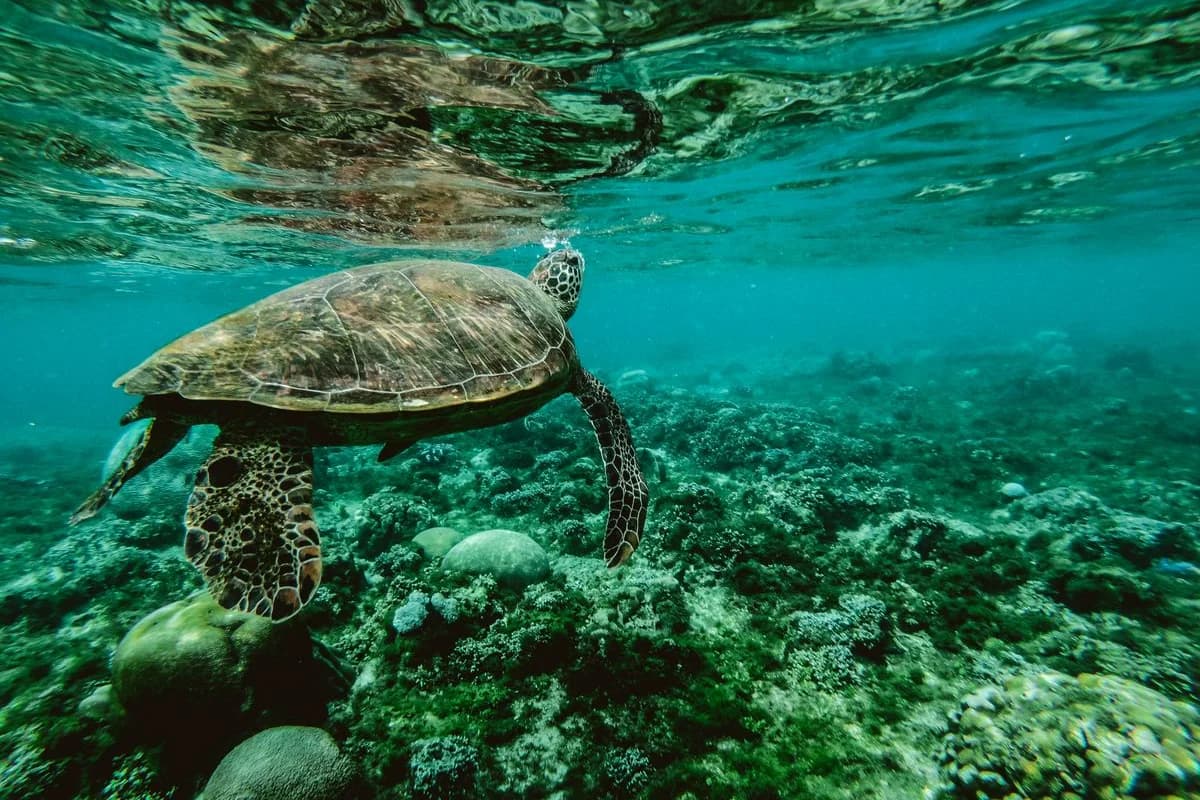
Green Turtles are the most common and nest year-round, with peak activity from November to March. You are almost guaranteed to see them during a peak-season night patrol. They prefer the central section of the beach where the sand is deep enough for their large body pits. A single female can lay up to 120 eggs per clutch and returns to lay multiple clutches across the season.
Olive Ridley Turtles nest primarily from November through February. These smaller turtles are known for their synchronized nesting events, where multiple females arrive on the same night. While Sukamade does not host the massive arribadas seen in Costa Rica, it is not unusual to see 20-30 Olive Ridleys on a single beach patrol during December.
Hawksbill Turtles are the rarest regular nester here, with only 5-15 nests per year. They nest in low numbers but with remarkable consistency, and the best chance to see one is during the heart of the wet season in January and February. Hawksbills prefer to nest higher up the beach near the vegetation line, so their tracks are harder to spot.
Leatherback Turtles, the giants of the turtle world, are occasional visitors. In good years, 1-5 nests are recorded, typically between November and January. Sightings are rare and unpredictable, making a Leatherback encounter the holy grail of any Sukamade visit.
What makes Sukamade truly special is this diversity. Most Indonesian nesting beaches host only one or two species. Sukamade's protected status within Meru Betiri National Park and its remote location have preserved the conditions that attract multiple species to the same shore.
How Night Patrols Work: A Step-by-Step Guide
A night patrol at Sukamade is the highlight of most visitors' trips. The experience is carefully structured to maximize your chance of seeing turtles while minimizing disturbance. Here is what you can expect, step by step.
Step 1: Meet at the ranger station (7:30-8:00 PM). Your group gathers at the main station where the head ranger gives a brief orientation. He explains the rules — no white light, no flash photography, stay behind the turtle, speak in whispers — and shares the previous night's sightings so you know what to look for.
Step 2: Gear up. Rangers distribute red-filtered flashlights or check that your headlamp is set to red mode. You will be asked to leave any white-light sources behind. Each visitor is paired with a ranger who serves as their guide for the night. Groups are kept small, typically 4-8 people, to keep noise and disturbance to a minimum.
Step 3: Walk the beach in formation. The group walks south along the beach in a loose line, scanning the sand for fresh tracks. Rangers lead the way, identifying tracks from the previous night and explaining what each species' track pattern looks like. The beach is dark — the stars overhead are often brighter than any artificial light.
Step 4: Fresh tracks spotted. When a ranger finds fresh tracks leading up from the water, the group stops. The ranger assesses whether the turtle is still nesting or has returned to the sea. If she is still on the beach, the group waits quietly at a distance while the ranger checks her progress.
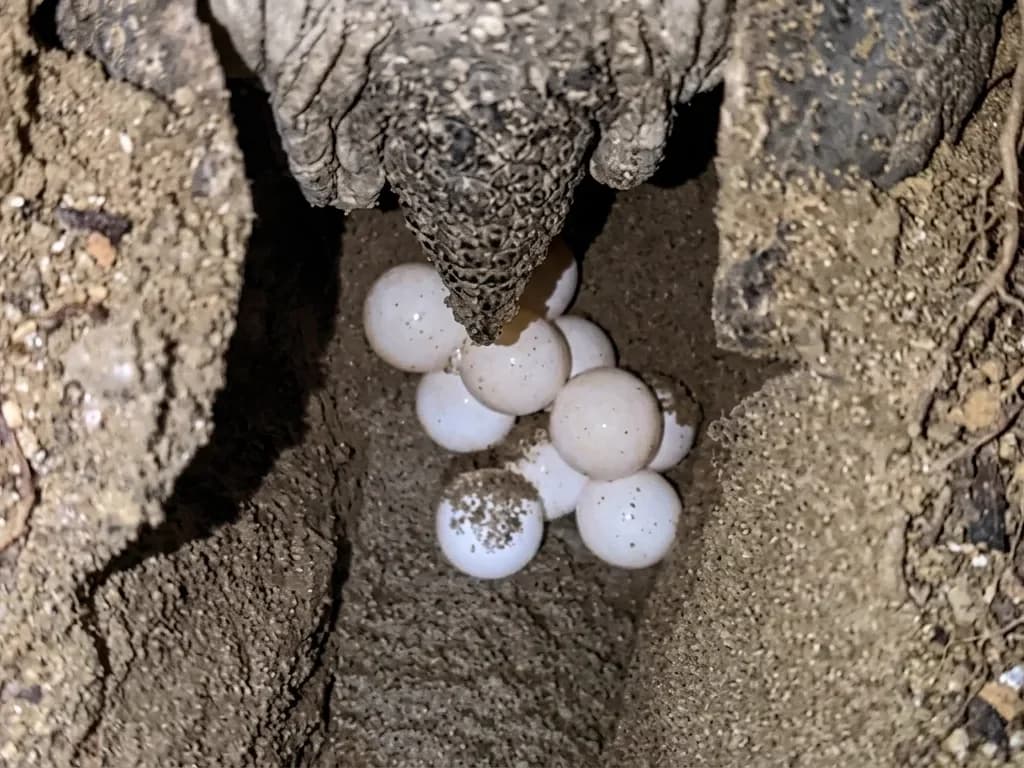
Step 5: Approaching the turtle. Once the turtle has begun laying eggs — she enters a trance-like state and will not be disturbed — the ranger signals the group to approach slowly and quietly. You will kneel on the sand behind her rear flippers, never in front where she can see you. The ranger uses his red light to point out the eggs dropping into the nest cavity and the rhythmic heaving of her shell as she works.
Step 6: Data collection. While the turtle lays, the ranger measures her shell length and width, checks for existing tags, and applies a new tag if needed. You may be invited to help count the eggs as they drop — typically 100-120 for a green turtle. Every egg is recorded in the daily log that has been maintained since the 1980s.
Step 7: The return. After she covers her nest and begins the slow, laborious crawl back to the ocean, the group maintains a respectful distance. Watching a turtle disappear into the surf after laying her eggs is an experience that stays with you for a lifetime. The patrol continues until 2 AM or until the group is too exhausted to continue.
Weather and Access Considerations
Peak season coincides with the wet season, and this affects your journey:
- Rain: Afternoon downpours are common. The unpaved road from Banyuwangi becomes slippery and slower.
- Rivers: The Sukamade river crossing near the beach can become impassable after heavy rain. Rangers close the crossing if water levels rise dangerously.
- Humidity: Expect 80-90% humidity. Light, quick-dry clothing is essential.
Despite the rain, the nesting is worth it. The turtles don't mind a little rain — in fact, overcast nights often see higher nesting activity.
When to Avoid
The dry season (June-September) offers easier road access and sunny beach weather, but turtle nesting drops significantly. If your primary goal is seeing turtles, plan for November through March. If you want easier travel conditions and don't mind lower turtle activity, the dry season is more comfortable.
Local Knowledge
The Meru Betiri rangers have monitored this beach for decades. They know the individual turtles that return each season — some females have been nesting here for over 20 years. The same turtles often return to the same stretch of beach where they themselves hatched, a phenomenon known as natal homing.
A conversation with the head ranger before your night patrol adds context you won't find in any guidebook. He can point out the specific nests, explain the tagging program, and share stories of turtles he has tracked across the Indian Ocean.
What Makes Sukamade Different from Other Turtle Destinations
Sukamade stands apart from other turtle nesting sites across Indonesia and Southeast Asia in several important ways. Understanding these differences helps you appreciate why this particular beach is worth the difficult journey.
Santolo Beach in West Java is one of the most popular turtle tourism destinations in Java, drawing large crowds especially during holidays. Santolo is accessible by paved road and is within a few hours of Bandung, making it convenient for weekend visitors. But convenience comes at a cost — the beach sees heavy daytime traffic, the nesting turtles are accustomed to high human presence, and the experience can feel more like a commercial attraction than a conservation effort. Night patrols at Santolo are often crowded, with multiple tourist groups competing for space around a single nesting turtle.
Pangumbahan Beach, also in Sukabumi, West Java, is another well-known turtle nesting site with a strong hatchery program. It hosts primarily Green Turtles and has decent infrastructure with cottages and a restaurant. However, Pangumbahan sits outside a national park, which means development pressure is constant. Nearby hotels and villas have been built close to the beach, and light pollution from these structures can disorient nesting turtles and hatchlings.
The Turtle Islands (Kepulauan Penyu) in Malaysia and the Sanggata area in East Kalimantan offer excellent turtle viewing but require expensive permits and are logistically complex to reach for independent travelers. The permits are limited and often booked months in advance by tour operators.
Sukamade offers something none of these can match. It sits inside Meru Betiri National Park, a protected conservation area that buffers the beach from development and light pollution. Visitor numbers are naturally limited by the difficult access — the 4WD journey through the jungle acts as a filter, ensuring only committed travelers make it. Night patrols are ranger-led with small groups, never exceeding 8 people. The beach is pitch black at night, as it should be, and the only lights are the stars and the ranger's red headlamp. This authenticity, combined with the rare opportunity to see four species on one beach, makes Sukamade a genuinely unique destination.
Conservation Impact: How Your Visit Helps
Every visitor to Sukamade contributes directly to turtle conservation, often without realizing it. The economics of conservation here are simple and effective.
Your park entrance fee (IDR 50,000 for international visitors) flows directly into Meru Betiri National Park's conservation budget. This funds the salaries of the rangers who patrol the beach every single night of the year, rain or shine. Without these patrols, nest poaching would be rampant — turtle eggs are still considered a delicacy in parts of Java, and a single nest of 100 eggs can fetch IDR 500,000 on the black market.
The accommodation fees you pay at the ranger station support the hatchery program. The hatchery protects nests laid too close to the high-tide line, relocates eggs threatened by erosion, and provides a controlled environment where hatchlings can emerge safely. Rangers monitor every incubated nest, recording hatching success rates that feed into Indonesia's national sea turtle database.
Anti-poaching efforts are funded largely through tourism. The presence of visitors itself acts as a deterrent — poachers avoid beaches where tourists and rangers are active. The additional income from guiding fees means rangers do not need to supplement their wages through other means, removing the economic incentive to participate in the egg trade.
Community education programs, funded by tourism revenue, teach local fishing communities about turtle conservation. Fishermen who once accidentally caught turtles in their nets now participate in the release program. School groups from Banyuwangi visit regularly, and the rangers run conservation workshops for children from Sarongan and surrounding villages.
By choosing to visit Sukamade, you are not just witnessing conservation — you are funding it. Every night patrol you join, every meal you eat at the station, every night you stay in the ranger accommodation, contributes to a system that has protected this beach for over 40 years.
Plan Your Visit
For the best experience, plan a 2-night stay at Sukamade. This gives you two opportunities for night patrols and a full day to explore the surrounding national park. The ranger station offers basic accommodation, or you can arrange a homestay in Sarongan village.
Contact us to check current conditions before booking. We monitor river levels and road conditions daily and can advise the best week for your visit based on the latest nesting reports.
Plan your journey to Sukamade (/blog/how-to-get-to-sukamade-beach-complete-guide) with our complete travel guide, or learn about the four species (/blog/4-sea-turtle-species-found-at-sukamade) you may encounter during your visit.
Q: Is seeing a turtle guaranteed during my visit?
A: Turtles are wild animals, so there is no 100% guarantee. But in peak season (Dec–Feb), night patrol success rates exceed 90%, and hatchling releases are available almost year-round.
Q: How long does turtle egg incubation take?
A: Around 45–65 days depending on sand temperature. Eggs laid in December usually hatch starting in February.
Q: When should I come if I want to see turtles?
A: November–March, peaking in December–February. Plan at least 2 nights so you get two night patrol chances.
"We came in January and saw three turtles lay eggs in one night. Patrolling with the rangers was the most memorable moment of our entire trip to East Java." — Family from Jakarta, visited January 2026
Contact us on WhatsApp — https://wa.me/6282143034582?text=Hi!%20I'm%20interested%20in%20booking%20a%20guided%20night%20patrol%20with%20the%20Ranger%20Activities%20program

Local travel consultant in Sarongan Village, Meru Betiri National Park. We plan authentic, responsible turtle tours — 4x4 jungle access, ranger night patrols, and hatchling releases — with local guides who live here.