Getting to Sukamade Beach: Complete Travel Guide
Getting to Sukamade Beach is an adventure in itself. Located deep inside Meru Betiri National Park on the remote south coast of East Java, the journey takes you through rubber plantations, jungle rivers, and some of the roughest roads in Java. This guide covers every option, from public transport to private charter.
Starting Point: Banyuwangi (Airport / Train Station / Ketapang Port)
Final Access: 20 km 4WD track — 4x4 vehicle required
Total Time: 4–5 hours from Banyuwangi
Sewa 4WD: IDR 500,000–800,000 per person
The Route Overview & Exact Segment Distances
*Field verified by Sea Turtle Tours local guide team: September 2026.*
All routes lead through Banyuwangi, the easternmost regency in Java. From Banyuwangi city center to Sukamade Ranger Station is approximately 95 kilometers with an average travel time of 4.5 to 5.5 hours.
Online travel blogs frequently confuse the off-road distance, citing either 20 km or 40 km. Here is the exact, verified breakdown of each road segment:
- Segment 1 — Banyuwangi to Sarongan (~65 km, ~2 hours):
- Road type: Smooth paved asphalt through Rogojampi, Cluring, and Jajag / Pesanggaran. Standard 2WD city cars, vans, and buses travel this section easily.
- Segment 2 — Sarongan Village through Kendenglembu Plantation to Rajekwesi / Park Gate (~10 km, ~30–45 mins):
- Road type: Transition zone with degraded asphalt, broken pavement, and stony macadam through rubber and cocoa plantations. Accessible by high-clearance vehicles, but slow going.
- Segment 3 — Rajekwesi Park Boundary to Sukamade Ranger Station (~20 km, ~2 hours):
- Road type: Dedicated 20 km 4WD jungle expedition track inside Meru Betiri National Park. Entirely unpaved dirt, rock shelves, tree roots, and 3 unbridged river crossings (including the main Sukamade River ford). Strictly 4WD only with high-clearance snorkels/winches. Standard vehicles cannot pass.
Stage 1: Getting to Banyuwangi
By air: Banyuwangi's Blimbingsari Airport (BWX) receives daily flights from Jakarta and Surabaya. Garuda Indonesia, Lion Air, and Citilink all service the route. Flight time from Jakarta is approximately 1.5 hours.
By train: Several daily trains from Surabaya to Banyuwangi Baru Station. The journey takes 4-5 hours and offers scenic views of rice paddies and volcanic peaks. The executive class trains (Argo Wilis, Wijayakusuma) are comfortable and air-conditioned.
By ferry from Bali: The Ketapang-Gilimanuk ferry connects Bali and Java 24 hours a day. From Gilimanuk port in Bali, it is a 30-minute ferry crossing to Ketapang port in Banyuwangi. Ferries depart every 30-60 minutes and the fare is minimal (approximately IDR 10,000 for passengers).
Stage 2: Banyuwangi to Sarongan
From Banyuwangi city center, head south toward Meru Betiri National Park. The road is paved and in good condition for the first 65 kilometers. You will pass through the towns of Rogojampi, Jajag, and Pesanggaran before reaching Sarongan.
At the park entrance gate near Andongrejo, you register and pay the entrance fee (IDR 10,000 for domestic visitors, IDR 50,000 for international visitors). Keep your ticket as it will be checked again at Sukamade.
The road continues to Sarongan village, the last settlement before the beach. Sarongan has small warungs (food stalls) and basic shops. This is your last chance to buy water, snacks, or any supplies before heading deeper into the park.
Stage 3: Sarongan & Rajekwesi to Sukamade (The 20 km 4WD Section)
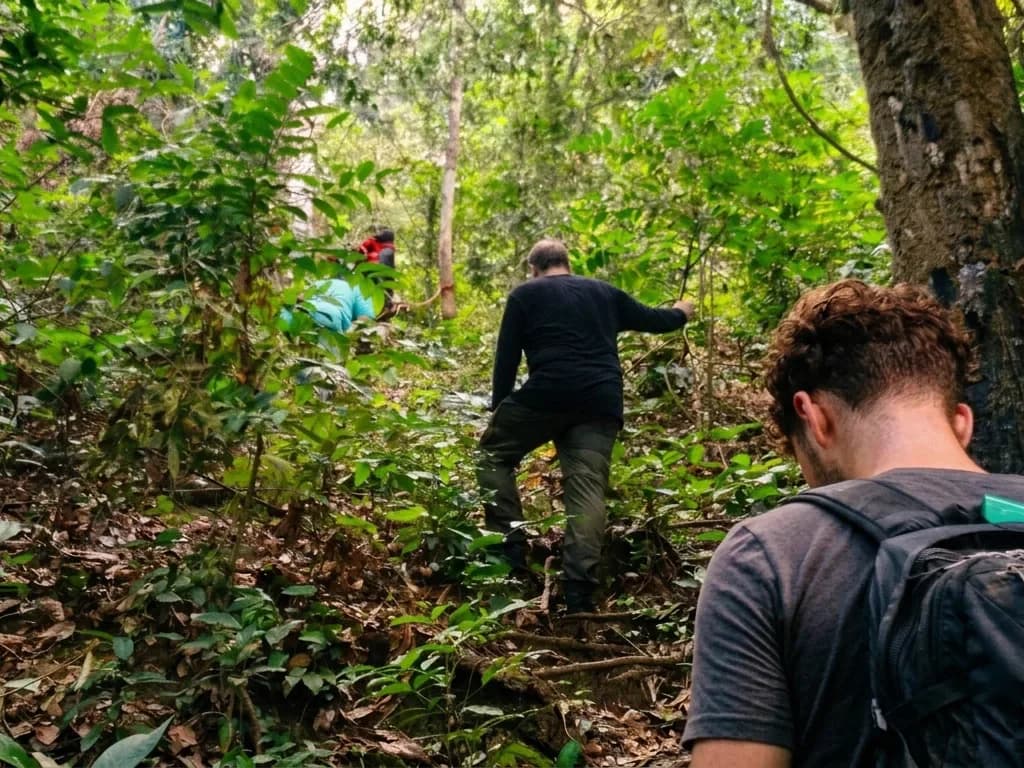
After passing through Sarongan and the Kendenglembu plantation toward Rajekwesi, the sealed road ends completely. The remaining 20 kilometers are a rugged, unpaved track through primary jungle. This is where the 4WD jeep earns its keep.
Road conditions vary dramatically by season:
- Dry season (May-October): Bumpy but passable. Dusty. The river crossings are shallow.
- Wet season (November-April): Muddy, slippery, with deeper river crossings. Some sections require engaging 4WD low-range. The Sukamade river near the beach can flood and temporarily block access.
The drive takes 2-2.5 hours for the final 20 kilometers of dense rainforest track. You will cross three unbridged rivers — during the wet season, water can reach the jeep's floorboards. Hang onto the roll cage; the ride is genuinely bumpy.
The Sukamade river crossing closes when water levels are unsafe. Check current conditions with your driver or the ranger station before leaving Sarongan.
Booking Your 4WD Transport
Booking your 4WD transport in advance is essential for a smooth journey to Sukamade. The most reliable option is a private charter with Sea Turtle Tours, whose drivers know the Meru Betiri road intimately and maintain regular communication with the ranger station about current conditions.
What is included in a typical charter:
- Experienced driver who knows the Sukamade road and river crossings intimately
- Hotel pickup from your accommodation in Banyuwangi (most operators cover Banyuwangi city and Ketapang port)
- Fuel for the round trip
- Emergency supplies including basic first aid and recovery equipment
- Park registration assistance at the Andongrejo gate
- Communication with the ranger station to confirm road conditions before departing Sarongan
Cost range: Prices vary depending on group size and season. For a private 4WD jeep, expect to pay approximately IDR 500,000–800,000 per person, with the lower end applying to groups of 4–6 passengers sharing a vehicle. Solo travelers or small groups of two typically pay closer to the upper end. Most charters include the driver's overnight accommodation at the ranger station — confirm this when booking to avoid an unexpected surcharge.
What to look for in an operator: Not all 4WD operators have the same level of experience on the Sukamade route. Choose one whose drivers have made this trip regularly — the road changes dramatically between seasons, and a driver who knows where the deepest mud holes form and which river crossings become treacherous after heavy rain can mean the difference between a manageable journey and spending hours stuck in the jungle. Ask whether the vehicle carries recovery equipment such as tow straps, a shovel, and traction boards. A working radio or satellite phone to contact the ranger station is also important, as cellular signal is unreliable beyond Sarongan.
Book in advance during peak season: During July and August (Indonesian school holidays) and December through February (peak turtle nesting), 4WD transport books out weeks in advance. There are a limited number of vehicles that service the Sukamade road, and last-minute arrangements are often impossible during these months. Book at least two weeks ahead if your travel dates fall in peak season.
It is worth paying a little more for a reputable operator. A breakdown on the Sukamade road is not a simple inconvenience — you could wait hours for another vehicle to reach you, and recovery costs are high. A well-maintained 4WD and a driver who has navigated this road through both dry-season dust and wet-season mud are the most important factors in a successful journey to Sukamade.
The River Crossing
The Sukamade river crossing is the final obstacle. During the dry season, it is a shallow, easy ford. After heavy rain, the river can rise rapidly. Rangers monitor the water level and will not allow crossing if it exceeds a safe depth (approximately 60cm). If the river is too high, you may need to wait hours or even overnight for it to drop.
4WD Transport Options
Option 1: Private charter with Sea Turtle Tours (recommended)
We provide 4WD jeep transport with experienced drivers who know the road intimately. Pickup from your Banyuwangi hotel is included. Our drivers carry emergency supplies, basic recovery gear, and communicate with the ranger station about road conditions before departing Sarongan.
Option 2: Ojek (motorcycle taxi)
Local motorbike taxis operate from Sarongan to Sukamade during the dry season. The path is narrow but rideable on a dirt bike. This is not recommended for inexperienced riders. Expect to negotiate a price (approximately IDR 100,000-150,000 one way).
Option 3: Self-drive
If you have a rental 4WD (Toyota Fortuner or similar), you can drive yourself. The navigation is straightforward — one road, no turns. You need the national park booking confirmation and must check in at the Andongrejo gate. Self-driving is not recommended during the wet season unless you have recovery equipment and experience driving in mud.
What to Expect at the Ranger Station
The ranger station at Sukamade is the hub of all activities on the beach, serving as accommodation, command center, and hatchery all in one compound. It is not a hotel by any stretch — expectations should be set for a rustic, immersive experience that puts you right in the middle of the conservation operation.
Accommodation: The station offers a simple guesthouse with basic rooms containing mattresses on the floor with mosquito nets. Rooms are clean but spartan — think four walls, a concrete floor, and a roof. There are no private rooms for solo travelers; guests share gender-separated dormitories. Bedding is provided, but bringing your own sleeping bag liner adds comfort and peace of mind. The walls are thin, and the jungle sounds (crickets, geckos, the distant crash of the Indian Ocean) are your constant companion.
Electricity and water: Solar panels provide power for a few hours each evening, typically from sunset until around 10 PM, when the lights go out and the station switches to battery backup for essential operations only. Charging phones and camera batteries during this window is possible if you bring a power strip, but the limited supply means you cannot rely on it. There is no hot water — showers are a bucket-and-dipper affair with water drawn from the well. The water is surprisingly refreshing after a humid day.
Bathroom facilities: Toilets are squat-style with flush buckets. Basic and functional is the best description. Toilet paper is not provided, and the drains run directly into the surrounding environment, which is why biodegradable toiletries are mandatory. The showers are open-air cubicles with a well wall — showering under the jungle canopy with birds overhead is an experience in itself.
The kitchen and meals: The ranger kitchen prepares simple Indonesian meals three times a day. Expect nasi goreng (fried rice), mie goreng (fried noodles), tempe, fried tofu, vegetables, and occasionally fresh fish caught locally. Meals are eaten communally in the open dining area. The food is hearty, clean, and filling — not gourmet, but exactly what you need after a long journey or a night patrol. Vegetarian options are available if you notify the station in advance.
The common area: A covered veranda with wooden benches and a long table serves as the gathering space. This is where guests eat, play cards, share travel stories, and wait for the evening patrol to begin. The atmosphere is social and welcoming — solo travelers quickly find themselves in conversation with other guests and the rangers. This is also where the nightly pre-patrol briefing takes place, with the head ranger reviewing recent turtle activity and assigning patrol groups.
The hatchery: Adjacent to the main station, the hatchery is a fenced enclosure where at-risk nests are relocated for protection. Wooden stakes mark each buried nest with a tag noting the species, date laid, and expected hatch date. During the day, rangers may invite you to see the hatchery up close and explain how they monitor incubation temperatures and predict hatch dates. Watching a nest erupt with dozens of tiny hatchlings scrambling toward the water is a sight you will not forget.
Rangers' quarters and nightly briefing: Behind the guest area, the rangers have their own simple quarters. These men live at the station in rotating shifts, spending weeks at a time away from their families. Before each night patrol, the head ranger gathers all visitors for a briefing that covers the evening's plan, recent turtle activity, safety guidelines, and the specific rules for the patrol. This briefing sets the tone — serious about conservation, warm in delivery, and deeply informative.
What the Journey Is Really Like
The road to Sukamade is not for everyone. If you expect paved roads and comfort, this is not your destination. But for travelers who embrace the bump, the mud, and the uncertainty, the reward is a beach that feels genuinely undiscovered.
The jeep ride becomes part of the story. You will pass through jungle canopy where monkeys cross the road, glimpse the occasional wild pig or deer, and feel the temperature drop as the track tunnels through primary forest. By the time you hear the Indian Ocean surf, the journey has transformed you from tourist into adventurer.
Practical Tips
- Leave Banyuwangi by 7 AM. The road is easier in the morning before afternoon rains and allows time for the full journey.
- Eat before Sarongan. Food options at the beach are limited to whatever the ranger kitchen is cooking.
- Bring medication for motion sickness. The winding road and bumpy track affect even seasoned travelers.
- Charge everything. Power at the ranger station is limited (solar + generator evenings only).
- Book ahead. The ranger station has limited guest capacity and requires advance registration.
Nearby Attractions Worth Adding to Your Trip
Sukamade Beach is the main draw, but the surrounding region of eastern East Java is packed with attractions that combine well with a turtle-focused trip. Adding an extra day or two to your itinerary opens up some of Java's most spectacular landscapes.
Red Island (Pulau Merah): Located about 30 kilometers west of Banyuwangi, Red Island is named for its distinctive red sand cliff that contrasts sharply with the turquoise water. The beach is wide, clean, and far less crowded than Bali's popular strips. Pulau Merah is one of East Java's best surfing destinations, with consistent waves that work year-round and break perfectly over a reef bottom. Beginners will find gentler waves at the southern end, while experienced surfers head to the main break near the red cliff. Surfboard rentals and basic accommodation are available right on the beach. Even if you do not surf, the sunset view from the top of the red cliff is worth the detour — the entire bay turns gold as the sun drops behind the mountains.
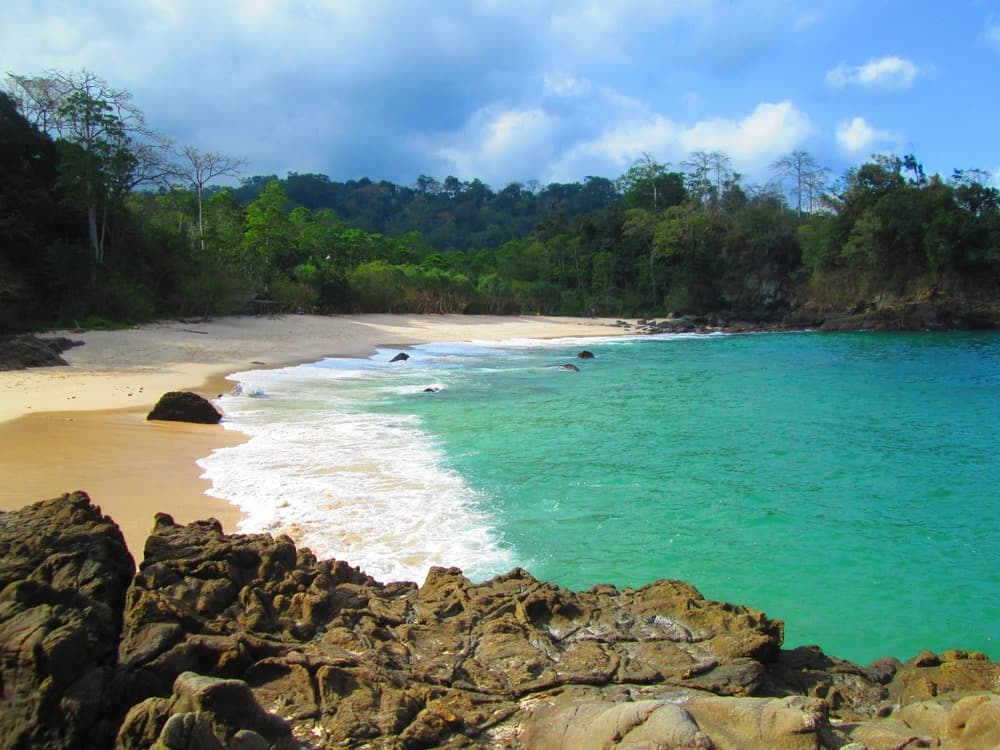
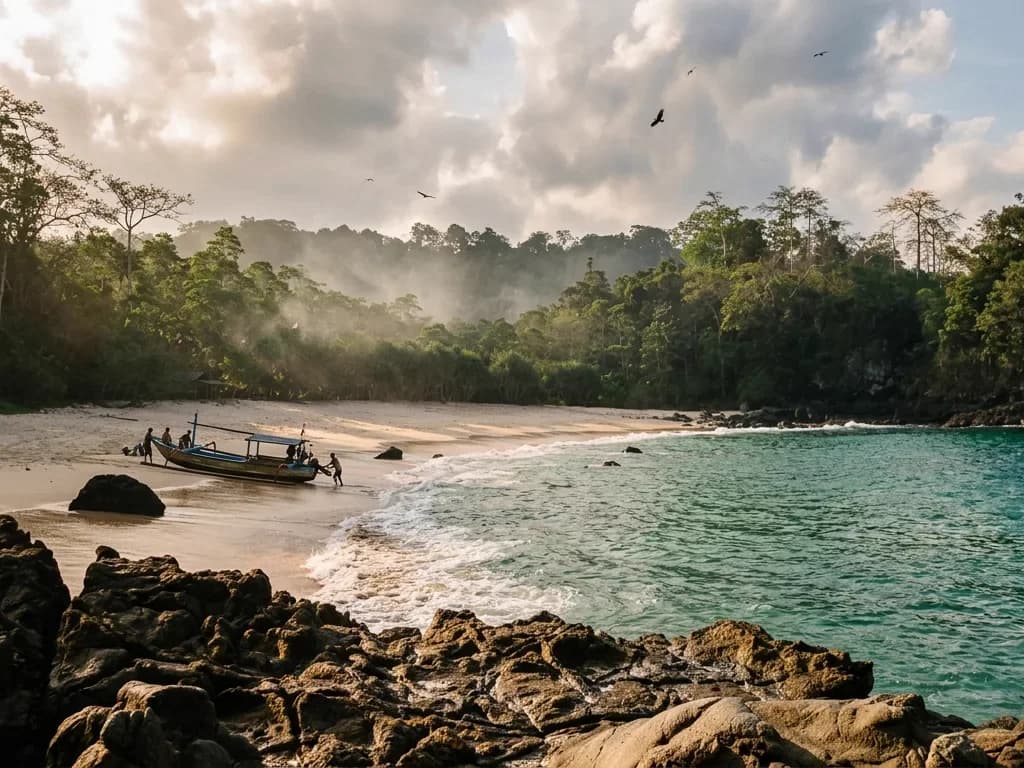
Green Bay (Teluk Ijo): Tucked into the coast of Meru Betiri National Park itself, Green Bay offers some of the clearest water on Java's south coast. The name comes from the brilliant emerald-green tint of the water, caused by the combination of white sand, coral reef, and sunlight. Snorkeling here is exceptional — the house reef is healthy and accessible directly from the beach, with colorful reef fish, occasional turtles, and the chance to spot reef sharks in deeper water. Teluk Ijo is less developed than Pulau Merah; there are no permanent warungs or accommodations, so bring supplies and plan for a day trip from Sukamade or Sarongan.
Permisan Bay: Located on the eastern side of Meru Betiri, Permisan Bay offers a different atmosphere from Sukamade's wild beach. The bay shelters several small coves with calm water, making it a good spot for swimming and paddling. The area also contains some historic colonial-era buildings from the Dutch plantation period, adding a layer of cultural interest to the natural beauty. The road to Permisan is easier than the Sukamade road, so it can be accessed with a regular vehicle during the dry season.
Rajegwesi Village and Waterfall: Rajegwesi is a traditional fishing village located within the national park, accessible by a scenic coastal track. The village itself is a glimpse into traditional Javanese coastal life — brightly painted fishing boats, stilt houses, and a daily rhythm dictated by the tides. Behind the village, a short hike leads to Rajegwesi Waterfall, a multi-tiered cascade that drops into a cool, deep pool perfect for swimming after the sweaty hike in. The waterfall is at its most dramatic in the wet season (November to March), which conveniently coincides with peak turtle nesting at Sukamade.
Banyuwangi City Attractions: The city itself is worth exploring before or after your Sukamade trip. Banyuwangi is the gateway to the Ijen Crater — famous for its blue fire phenomenon and the largest acidic crater lake in the world. A sunrise trek to Ijen is demanding but unforgettable, and it is possible to combine it with your Sukamade trip if you have a spare day. Closer to the city, Alas Purwo National Park occupies the southeastern tip of Java and offers excellent birdwatching, savanna landscapes, and G-Land, one of the world's legendary surf breaks. Banyuwangi's local cuisine, especially the spicy rujak soto and ikan bakar (grilled fish), is another reason to spend a night in town.
The Return Journey
Factor in the same 4-5 hours for the return trip. Most visitors stay 2 nights, which allows a full day at the beach plus two night patrols. Departure from Sukamade is typically in the morning after breakfast to ensure enough daylight for the road.
Check our packing guide (/blog/what-to-pack-for-your-sukamade-trip) for a complete gear checklist, and review accommodation options (/blog/where-to-stay-at-sukamade-accommodation-guide) to plan where you will sleep at Sukamade.
FAQ
Q: Can I reach Sukamade without a 4WD?
A: Not recommended. The last 20 km is an unpaved forest track with rivers to cross. Renting a 4WD with a local driver is the safest and most common option.
Q: How long is the journey from Banyuwangi to Sukamade?
A: 4–5 hours total: 2 hours to Sarongan on paved roads, then 2–3 more hours on the 4WD forest track.
Q: Can rivers block the road?
A: Yes. After heavy rain the Sukamade river can rise and temporarily close access. Rangers close the crossing if the depth exceeds about 60 cm.
Q: Can I take an ojek from Sarongan?
A: Possible in the dry season, about ${siteData.transport.ojek} one way. Not recommended for inexperienced riders because the track is narrow.
"The 4WD ride was a real adventure — rivers, jungle, and incredible views. The Sea Turtle Tours driver knows exactly what the road is like each season." — Traveler from Bandung, visited June 2026
Contact us on WhatsApp — https://wa.me/6282143034582?text=Hi!%20I'm%20interested%20in%20adding%20a%20Jungle%20Tracking%20adventure%20to%20my%20Sukamade%20stay

Local travel consultant in Sarongan Village, Meru Betiri National Park. We plan authentic, responsible turtle tours — 4x4 jungle access, ranger night patrols, and hatchling releases — with local guides who live here.